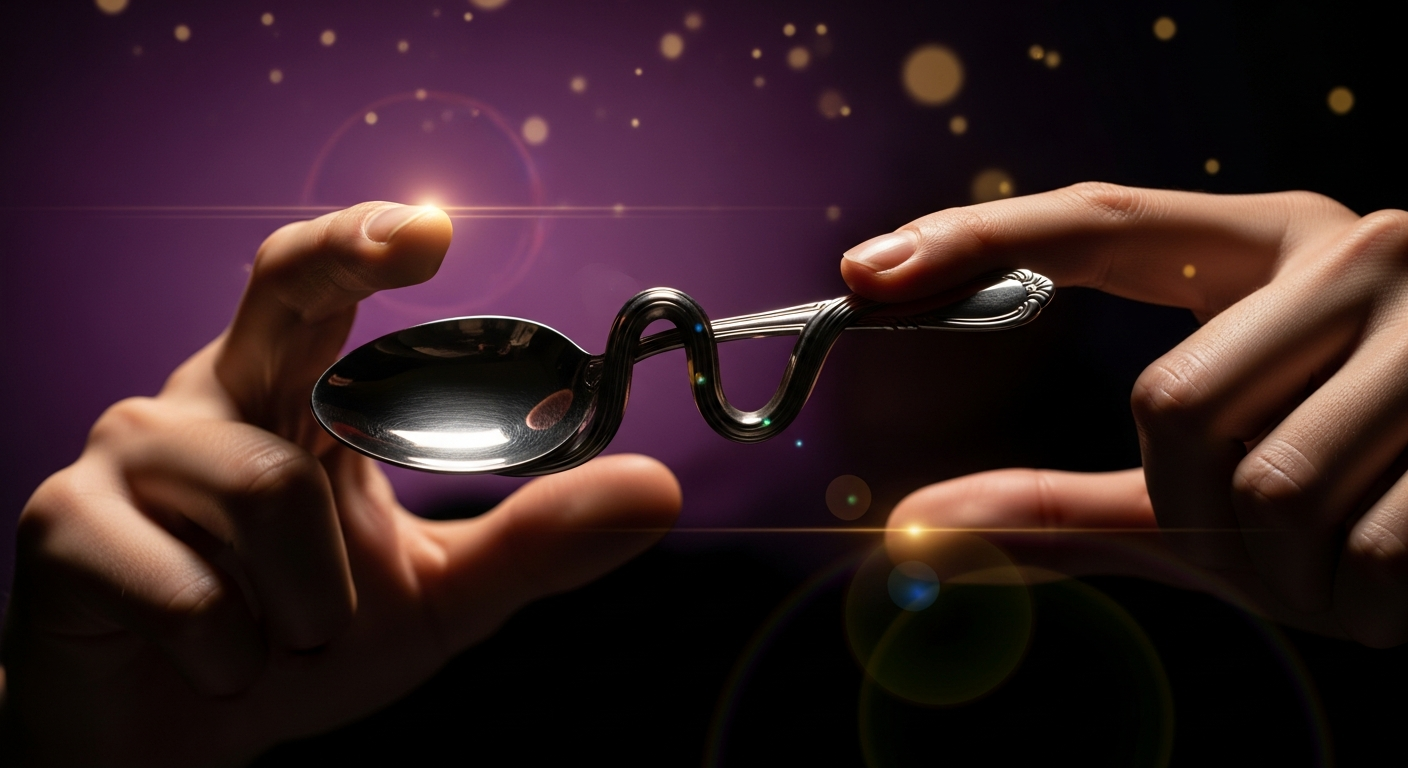
In 1973 Uri Geller sat on British television and bent a spoon with nothing but his fingertips. The UK went into uproar, some believed he had paranormal gifts, others cried 'trick!'. Both were right: telekinesis doesn't exist, but a stunning technique does. This is how it works.
Watch this trick in action
The technique: pre-bend and controlled fatigue
The classic method is called 'pre-bending': the magician quietly bends the spoon before the performance, for example, secretly pushing it against the table edge during a gesture. The spoon looks straight, but the metal is weakened. After that, the mentalist only needs light finger pressure to make it 'spontaneously' bend further.
A second technique is 'controlled fatigue': rapid back-and-forth rubbing on one point heats the metal and softens it (a metallurgical effect). Combined with minute constant pressure, it does the rest. The audience sees the spoon bend as if melting.
For keys and forks there are also 'gimmicked' versions, specially prepared objects with a fracture point. But the real masters use ordinary restaurant cutlery.
- ✦Pre-bend: bend before the show, 'reveal' slowly during the act
- ✦Rubbing & warmth: friction heat softens the metal
- ✦Misdirection: hold a separate conversation during the actual bending
- ✦Slow reveal: lift the spoon slowly so gravity bends it further
The psychology: you want to believe
The strongest psychological element of spoon bending isn't deception, it's longing. People want to believe there's more than science currently knows. Research by psychologist Daniel Wegner shows the brain happily draws conclusions that satisfy emotionally. A 'miracle' before your eyes activates the same reward centres as a religious experience.
Social pressure also matters. When a group sees something unbelievable, every reaction reinforces the next. Anyone who alone shouts 'but it's a trick' feels excluded. This collective effect explains why Uri Geller's shows had such massive impact.
Geller, James Randi and the battle for honesty
Magician James Randi spent years debunking Uri Geller. He showed every Geller trick could be replicated with classic magic techniques. Yet Geller continued to convince millions. The line between 'show' and 'fraud' stayed blurred, until Geller largely stopped making paranormal claims in later years.
Today, mentalists like Sudesh Roman perform spoon bending as what it always was: beautiful theatre. No secret gifts, no false claims, only technique, charm and psychology. More honest, and therefore even more impressive.
The spoon doesn't bend through your mind, it bends through centuries-old technique and the innate human desire to believe in wonders. That is the real magic.