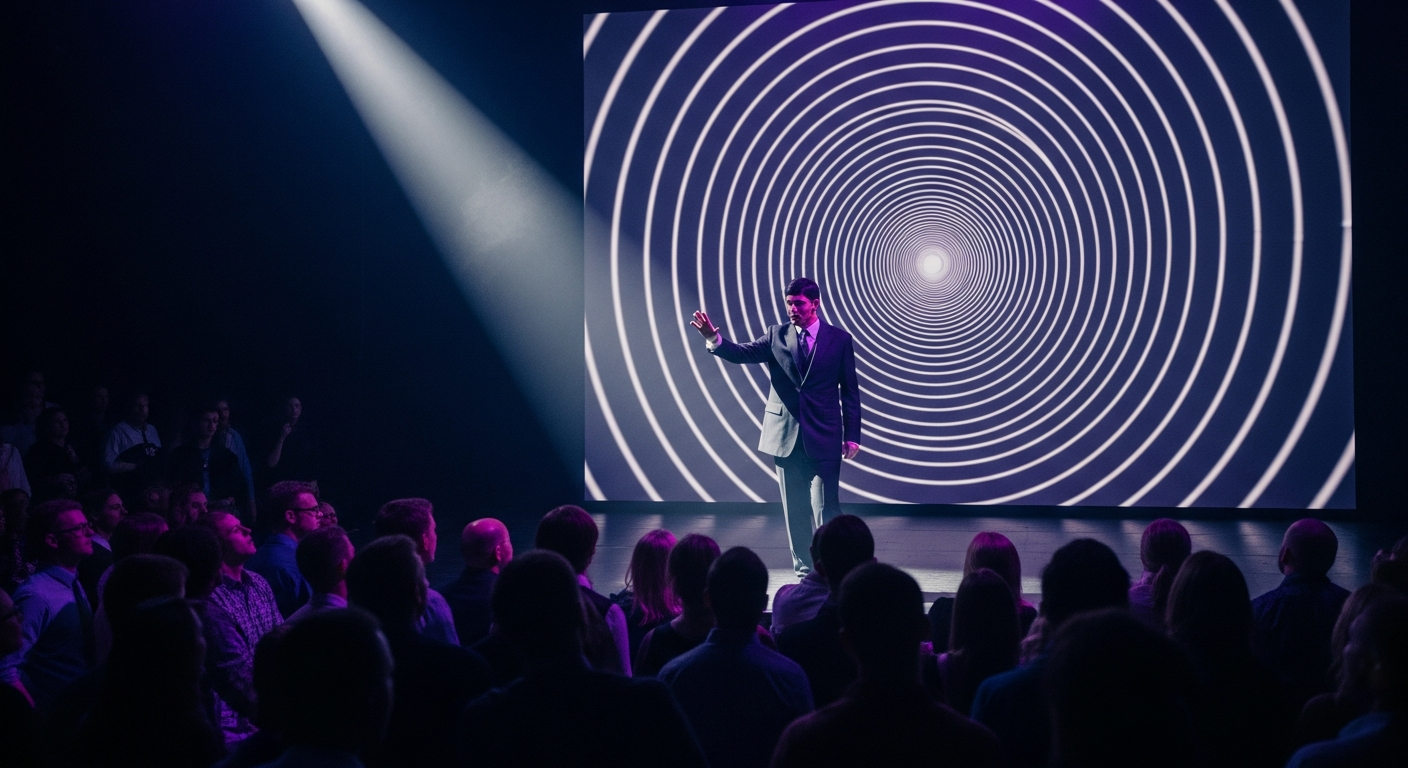
Many people confuse mentalism and hypnosis. They both fall under the broad concept of 'influencing minds', but they work fundamentally differently, are experienced differently by the audience and are suited to different types of events. If you are considering a mentalist for your event, this distinction is worth understanding.
What is mentalism?
Mentalism is the art of seemingly reading, influencing or predicting thoughts, choices and perceptions. A mentalist uses a combination of psychology, observation, communication techniques and, in the case of stage mentalism, carefully constructed acts to make the impossible seem plausible.
The spectator remains fully in control. Nothing is imposed on them. They are invited to think of something, make a choice, draw a card, and then the mentalist turns out to have known it. That feeling of 'impossible, but it just happened' is the core of mentalism.
What is hypnosis?
Hypnosis works via a state of heightened suggestibility: the hypnotist guides someone into a relaxed, focused state of consciousness in which the critical filter of the brain is temporarily less active. In that state, people are more receptive to suggestions.
Stage hypnosis, such as you see at shows where participants do things they would normally never do, is an entertainment form where volunteers participate in suggested scenarios. It is spectacular, sometimes hilarious and certainly not suitable for every audience or setting.
What suits your event?
For most corporate events, dinners, birthdays and anniversaries, mentalism is the better choice. It is more accessible, quieter, more elegant and works for every audience without participants needing to feel vulnerable. Mentalism has no 'victims', everyone enjoys it, including the participants.
Hypnosis works well at events where large groups want to laugh and where the atmosphere is already looser and more exuberant beforehand. It requires volunteers willing to temporarily let go of their control, which can create tension in formal or business settings.
- ✦Mentalism: for dinners, galas, anniversaries, corporate, stylish and universal
- ✦Mentalism: works for every audience, no risk of discomfort
- ✦Hypnosis: for high-energy parties with willing groups
- ✦Sudesh Roman: specialised in mentalism at the highest level
Sudesh Roman and hypnotic techniques
Although Sudesh Roman positions himself primarily as a mentalist, he uses techniques in his acts that border on hypnosis: suggestion, attention steering and the temporary influencing of perception. The result is an act that feels like more than mentalism alone, but without the loss-of-control dynamic that real hypnosis brings.
The audience remains fully conscious. What still seems to happen is simply inexplicable.
Mentalism and hypnosis are two different worlds, but they share the same goal: making the impossible tangible. For most events, mentalism is the right choice, and Sudesh Roman is the mentalist who delivers that at the highest level.