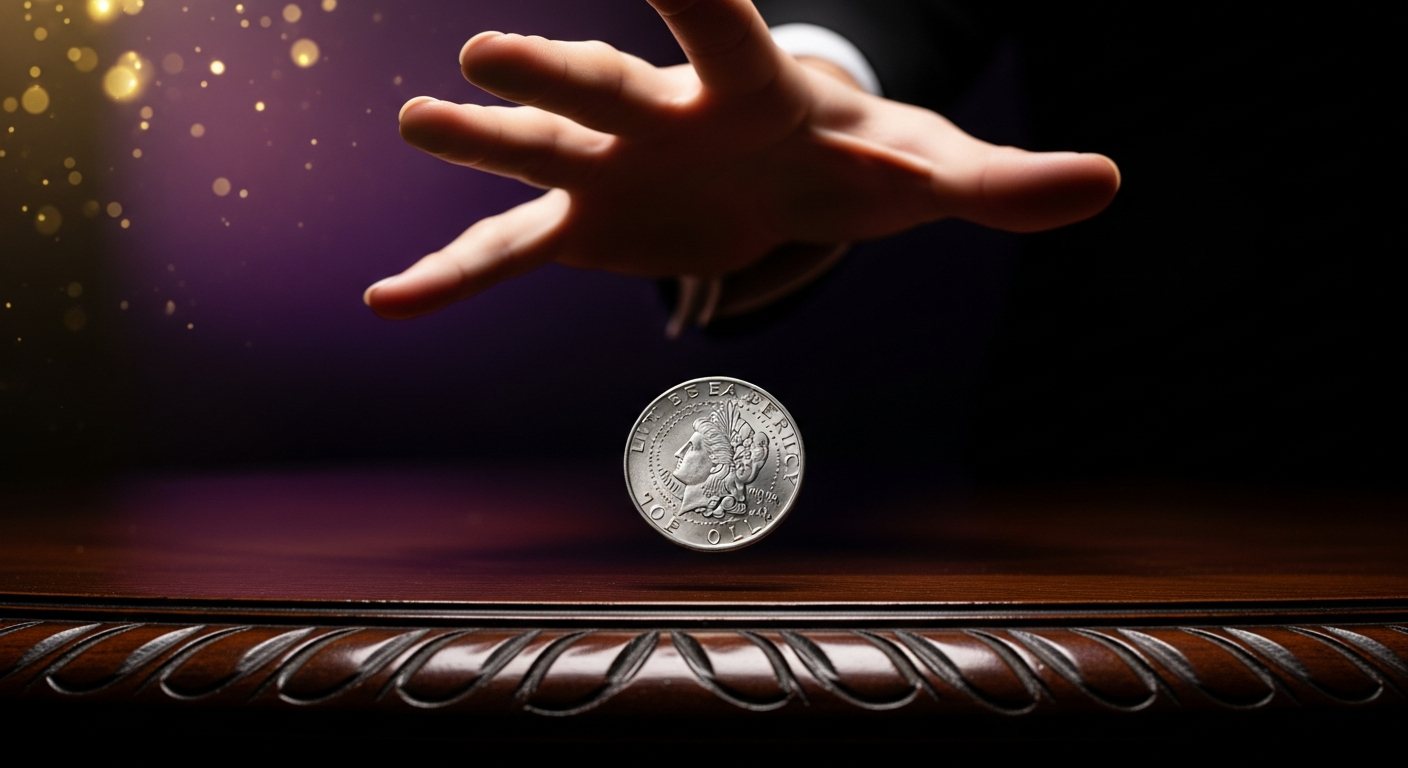
A coin on the table, a hand above. Slap! The magician lifts his hand, empty. And you hear the coin land beneath the table. He picks it up. Solid metal through solid wood. Or not quite.
Watch this trick in action
The technique: lap and duplicate
There are two main methods. The first uses 'lapping', a classic close-up technique where the object is secretly tossed onto the magician's lap instead of the table. The spectator sees 'a coin on the table', but in reality it's already resting on top of his thigh, hidden by the tabletop.
The second method uses a duplicate: a second coin previously hung beneath the table by a magnet or in a hand pocket. When the magician seemingly retrieves the fallen coin, he grabs the duplicate. The visible coin has meanwhile vanished via lapping.
The psychology: sound 'completes' the illusion
A 'clink' beneath the table is your brain's proof the coin passed. Sound has deeper credibility than sight, especially from an unseen direction. The brain links the sound with the visible motion preceding it: cause and effect, perfectly stitched.
The slap action also works. By striking the table quickly and loudly, the magician creates 'sensory overload': the ear hears the strike, the eye sees the hand, and anything before (or after) falls outside focus. In that 100 milliseconds the real work happens.
Coin through table works best at a round table with several spectators, everyone sees the same 'impossibility', and nobody sees the trick.